Foot and Toenail Fungus in Summer: How to Avoid Infection at the Pool and Prevent Reinfection
Why the Risk of Fungal Infection Increases in Summer
Fungi survive well in moist environments. Infection can occur through skin particles on the floor of a shower, changing room, or pool area, as well as through shared towels, shoes, and instruments. The risk is increased by tight, poorly ventilated footwear, socks that remain damp for long periods, small cracks, nail injuries, and pre-existing fungal infection between the toes.
Open footwear does not cause a fungal infection by itself. However, dust, friction from straps, dry heels, and minor injuries weaken the skin’s protective barrier. Closed athletic shoes create a different problem: heat and perspiration. Therefore, what matters is not the type of footwear itself, but its fit, ventilation, dryness, and regular rotation.
People with diabetes mellitus, impaired circulation, reduced sensation in the feet, or a weakened immune system should seek medical advice sooner, as even a small crack or infection may have more serious consequences for them.
What Foot and Toenail Fungus Looks Like
Athlete’s foot often begins between the toes. Possible signs include itching, flaking, whitened and macerated skin, cracks, burning, and an unpleasant odor. Blisters may occasionally appear, or the infection may spread to the sole.
With onychomycosis, the nail may:
- change color to white, yellowish, or brown;
- become thicker or start to crumble;
- lose its smoothness and shine;
- separate from the nail bed;
- accumulate loose debris beneath the nail plate.
These changes do not prove the presence of a fungal infection. Trauma, psoriasis, constant pressure from footwear, and other nail disorders may look similar. To establish the cause, the specialist examines the feet and, if necessary, collects material from the skin or nail for laboratory testing.
How to Protect Your Feet at the Pool and on Vacation
- Wear your own washable pool sandals in the shower, changing room, sauna, and pool area.
- Do not walk barefoot on shared wet floors.
- Dry your feet thoroughly after swimming, especially between the toes.
- Change damp socks and do not wear the same closed footwear again before it has dried.
- Do not share towels, shoes, nail files, scissors, or clippers.
- Keep the nails short, but do not cut deeply into the corners or injure the skin.
- Treat cracks and areas of friction promptly, and do not pull off damaged skin.
Why the Infection Returns
Reinfection is possible if the fungus remains on the skin of the feet, in the shoes, or on instruments, or if treatment was stopped too early. Infection between the toes often becomes a source of nail involvement, so it is important to assess not only the altered nail plate but the entire skin surface of the feet.
Footwear should be dried regularly. The method of treatment is selected according to the material and the recommendations of the specialist or the manufacturer of the disinfectant. Socks should be washed after each use, while personal instruments should be cleaned and disinfected. Aggressive solutions must not be applied directly to the skin or nails without medical advice: a chemical burn causes additional damage but does not guarantee a cure.
How Toenail Fungus Is Treated
Management depends on the confirmed causative organism, the number of affected nails, the depth of the changes, coexisting conditions, and previous treatment. Topical antifungal agents, systemic medications, and professional debridement of thickened or damaged areas of the nail may be used. Oral medications are prescribed by a physician with consideration of contraindications and drug interactions.
Nails grow slowly. Even after the infection has been eliminated, the altered part does not become clear immediately; it must gradually be replaced by a healthy nail plate. The result is therefore assessed by the clear growth of the nail from the base, rather than only by the color of the free edge.
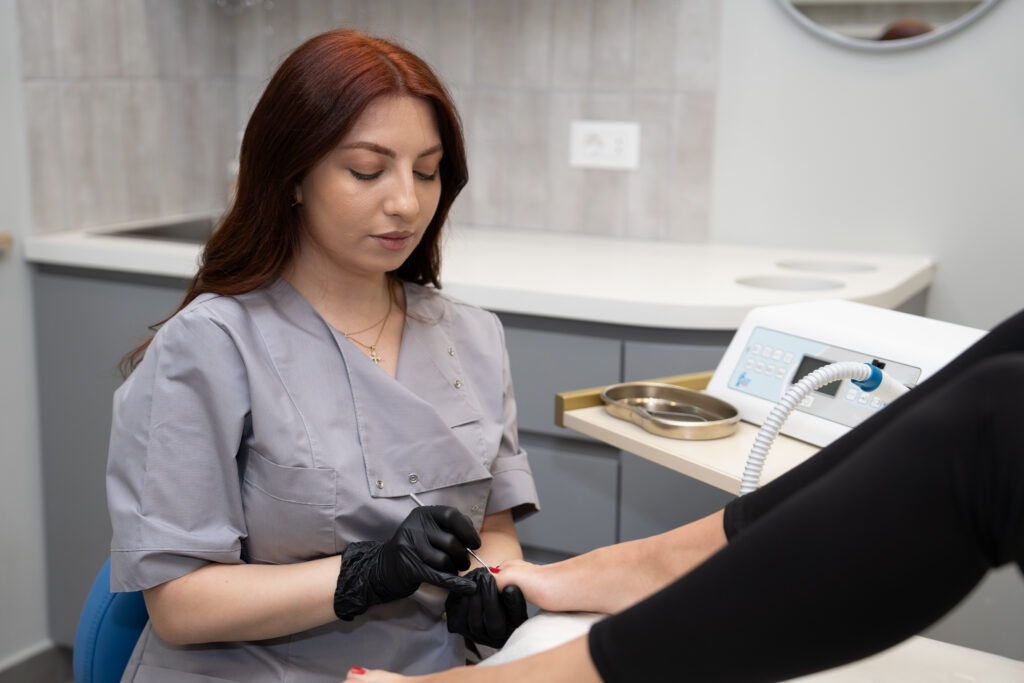
At the Medest Podiatry Department, specialists examine the feet, perform a medical pedicure, treat altered nails, and develop a management plan. A medical pedicure helps safely reduce nail thickness and remove damaged areas, but when an infection has been confirmed, it is part of a comprehensive approach rather than a substitute for antifungal therapy.
Frequently Asked Questions
Can You Catch a Fungal Infection from the Water in a Swimming Pool?
The main risk is associated not with the water itself, but with bare feet coming into contact with wet surfaces and shared items. Pool sandals and thorough drying of the feet reduce the likelihood of infection.
Do I Need to Throw Away All My Shoes?
Not always. The decision depends on the material and condition of the pair. Shoes should be dried and treated using a method that is suitable for the material and recommended by a specialist. Heavily worn footwear that cannot be cleaned may sometimes reasonably be replaced.
Can I Cover an Altered Nail with Nail Polish?
A decorative coating may conceal changes over time and make treatment more difficult. Before diagnosis and during treatment, it is best to discuss the possibility of applying a coating with a podiatrist or dermatologist.
When Is Urgent Medical Attention Required?
Medical attention is required for increasing pain, redness, swelling, pus, fever, or the appearance of a wound, especially in people with diabetes or impaired circulation.
If a nail has changed color, become thicker, or started to separate, do not try to determine the cause from a photograph. Book a consultation with a podiatrist at Medest to confirm the diagnosis, have the feet treated, and receive a plan for treatment and prevention of reinfection.