

Medical pedicure
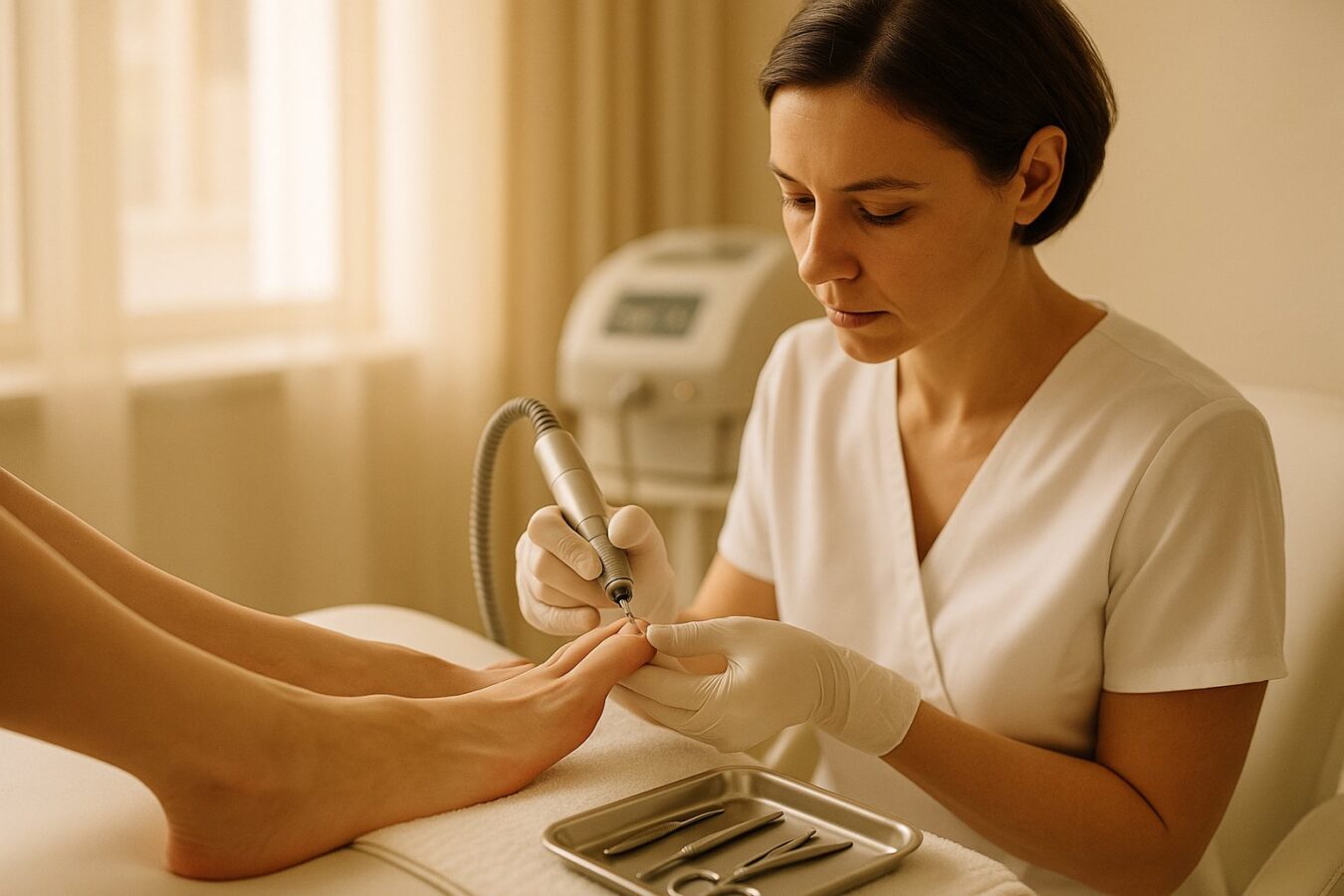
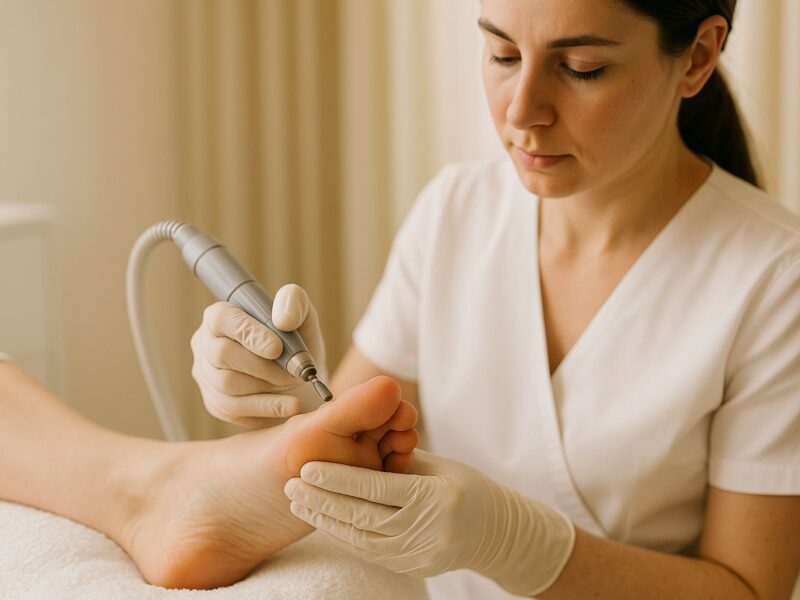
A medical pedicure is a device-based treatment of the feet and nails performed by a podologist. Unlike a salon pedicure, its goal is not only a neat appearance but also the treatment and prevention of problems: rough skin, calluses, cracks, and thickened or ingrown nails. The skin is not cut with a blade but removed with a device, so the procedure is suitable for sensitive and “problem” feet as well.
Problems a podologist treats
- cracks and rough skin on the soles (hyperkeratosis);
- calluses, corns, plantar warts;
- ingrown nails;
- fungal infections of the feet and nails;
- thickened and deformed nails (onychauxis, onychogryphosis);
- separation of the nail from the nail bed (onycholysis);
- feet affected by diabetes (diabetic foot syndrome);
- nails and foot skin affected by psoriasis.
How the procedure works
- Examination. The podologist examines your feet and nails and explains the likely causes of the problems and what to do about them.
- Cleansing — preparing the feet for treatment.
- Softening — hardened skin is gently softened with special products.
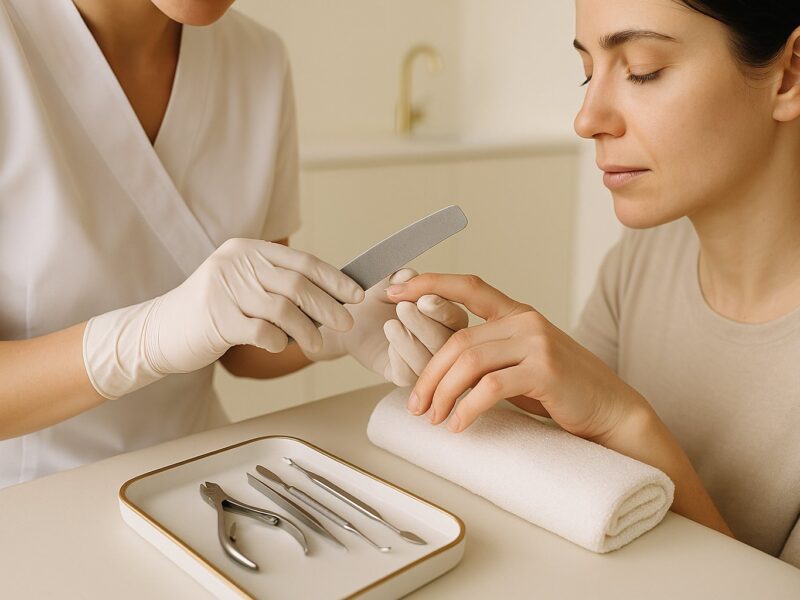
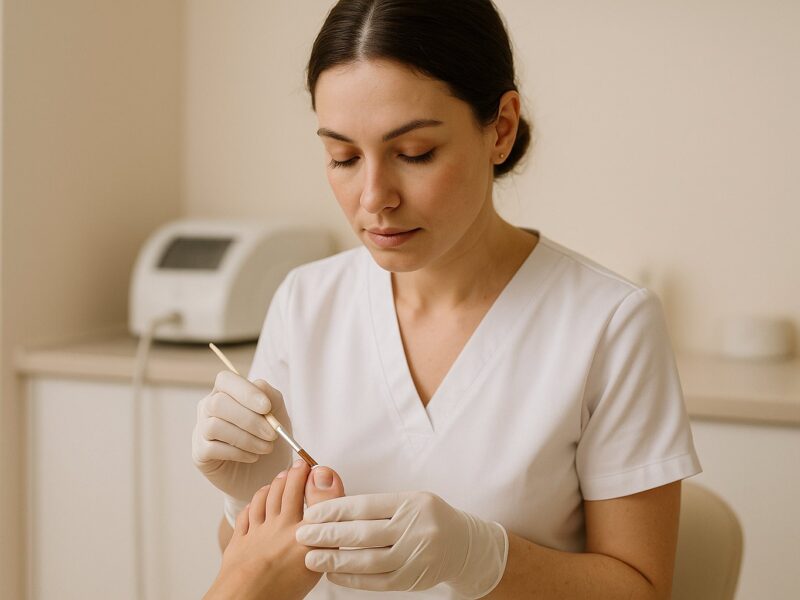
- Toe and nail treatment — if needed, cleaning up damaged areas of the nail, treating the cuticles, and removing calluses under the nails and between the toes.
- Foot treatment — removal of calluses and corns, treatment of cracks and plantar warts.
- Finishing — a light foot massage and a moisturizer.
- Home care. The podologist draws up a care routine and selects products — how long the result lasts depends largely on it.
Treatment options
- Standard medical pedicure — for minor problems: rough skin, small calluses, preventive care.
- For diabetic feet — especially gentle treatment that takes into account reduced sensitivity and the risk of injury.
- For psoriasis and damaged nails — work on altered nails and skin; it takes more time.
How often to come in
The podologist determines the interval between procedures at the consultation: it depends on how quickly your skin hardens and what problems you have. If you need separate treatment — for example, for an ingrown toenail, nail fungus or deep cracks — the specialist will suggest a treatment plan.
How to prepare
No special preparation is needed. For a few days before your visit, do not cut off calluses or treat your feet yourself — it is important for the specialist to see the actual condition. If you have diabetes or psoriasis, or take blood thinners, mention this at the start of your appointment.
Who performs it
Mirzoyan Hasmik — podologist at Medest. She performs medical pedicures and treats calluses, cracks, and ingrown, fungal and damaged nails.
You can read more about how a medical pedicure differs from a regular one in our podologist’s article. Why calluses keep coming back is explained here.
- rough skin, calluses, corns;
- cracked heels;
- thickened, deformed or ingrown nails;
- fungal infections of the feet and nails;
- diabetes — regular, gentle foot care;
- psoriasis affecting the nails and foot skin;
- preventive foot care.
Before the procedure, the specialist takes into account:
- acute purulent inflammation and open wounds on the feet;
- acute infectious diseases with fever;
- severe circulation problems in the legs — treatment is done only when indicated and with extra care;
- allergy to ingredients of the care products.
The doctor will go over the full list at the consultation.
Prices
| Name | Price |
|---|---|
| Medical hardware pedicure, diabetic foot | from 25 000 ֏ |
| Medical hardware pedicure, normal with mild problems | 15 000 ֏ |
| Medical hardware pedicure, psoriasis and damaged nails | 35 000 ֏ |
| Медицинский педикюр | 18 000 ֏ |
| Медицинский аппаратный педикюр, диабетическая стопа , 1ая степень | 15 000 ֏ |
| Медицинский аппаратный педикюр, псориаз и поврежденные ногти, 1ая степень | 25 000 ֏ |
| Консультация у подолога | 5 000 ֏ |
Prices valid as of 16.10.2026. The doctor confirms the exact cost after examination.
Questions & answers
How is a medical pedicure different from a salon pedicure?
It is performed by a podologist who can recognize and treat foot and nail problems. The skin is removed with a device, without blades, and after the procedure you receive recommendations for home care.
Does it hurt?
Usually not: the skin is softened first and then removed layer by layer with a device. Treating a corn or an ingrown nail can be sensitive — the specialist will let you know in advance.
Can I have a medical pedicure if I have diabetes?
Yes, and regular foot care is especially important with diabetes. The podologist works on such feet gently and watches for small injuries that the person may not notice.
How often should I come in?
It depends on the condition of your feet and how quickly the skin hardens. The podologist determines the interval at the consultation.
How much does a medical pedicure cost?
Current prices are listed in the table on this page; the cost depends on the type of procedure. The specialist will give you an exact plan and cost after an examination.
Performed by

Leave your phone number — our administrator will pick the doctor and time
You are booking: Medical pedicure
We call back during working hours. Prefer to write? Use WhatsApp.
By clicking the button you agree to the processing of personal data.