

Chemical peeling
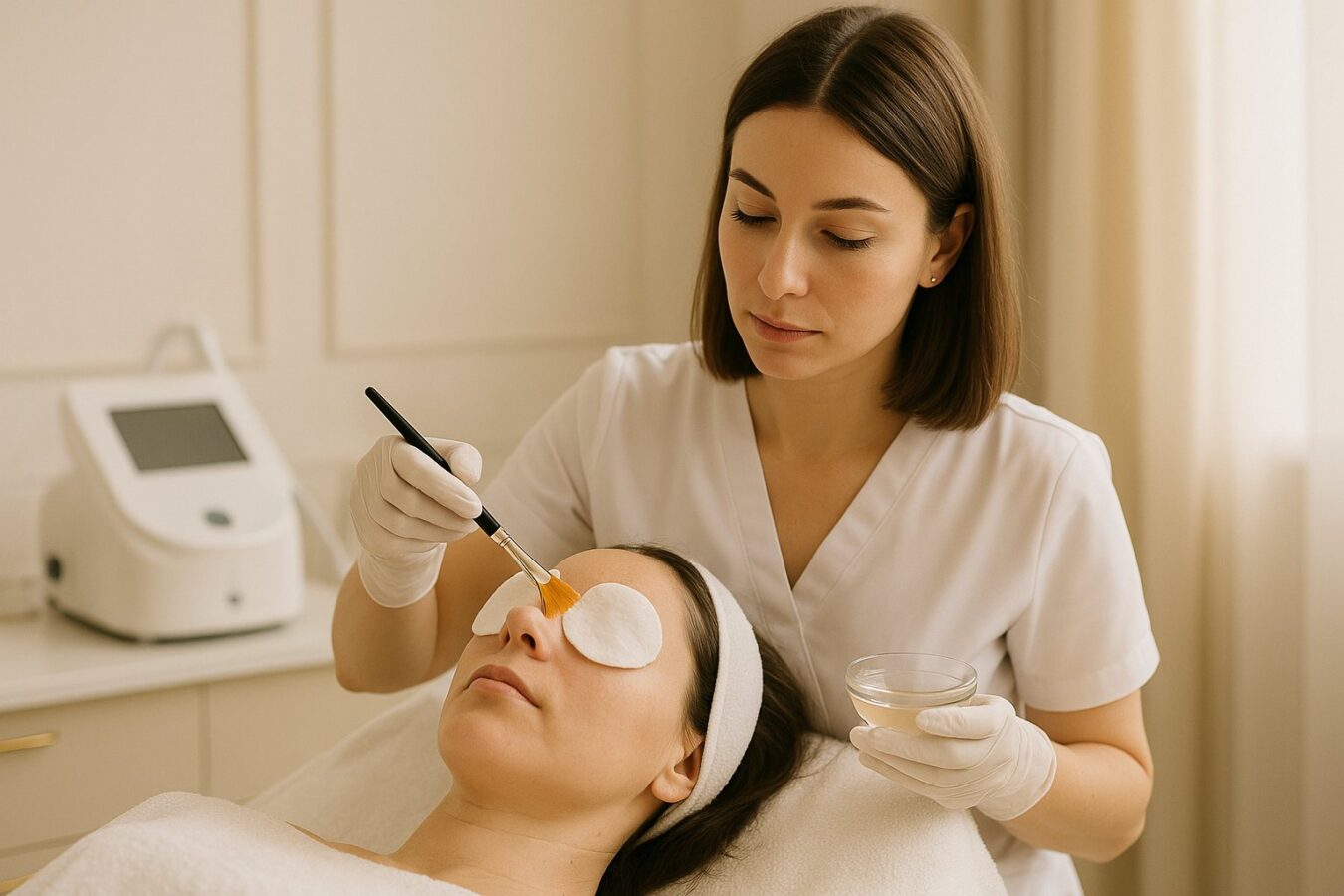
A chemical peel is the application of an acid solution to the skin that dissolves the bonds between dead skin cells and triggers skin renewal. The deeper a peel works, the more noticeable the effect and the longer the recovery.
At Medest, we use Skin Tech peels and the PRX-T33 biostimulating peel. The doctor selects the formula and depth based on your skin condition, your goal, and the time of year.
Common reasons to come in
- pigmentation spots and uneven skin tone;
- acne marks and uneven texture;
- acne and a tendency toward breakouts;
- fine lines and signs of photoaging;
- dull skin and enlarged pores.
Peels we offer
- Skin Tech Easydroxy + Azelaic Peel superficial peel: gentle skin renewal. Azelaic acid targets acne, inflammation, and pigmentation and is suitable for sensitive skin as well. According to the manufacturer, Easy Droxy is based on glycolic acid and improves skin texture.
- Skin Tech Easy TCA medium-depth peel: a trichloroacetic acid peel for the face and neck, as well as other areas. It is chosen for pronounced pigmentation, acne marks, scars, and signs of skin aging.
- PRX-T33 biostimulating peel for the face: requires no prior skin preparation and usually does not cause noticeable peeling. It stimulates skin renewal and improves texture and tone.
If you need a peel for body areas such as the underarms, elbows, or knees, take a look at the Biostimulating peeling Peach Peel.
How the procedure works
During the consultation, the doctor examines your skin and asks about tanning, medications, cold sores, and any tendency toward pigmentation or scarring. Before a medium-depth peel, home skin preparation may be needed; the doctor will prescribe it.
On the day of the procedure, the skin is cleansed and degreased, and then the solution is applied. While the acid is working, you will feel tingling or burning, which is expected. After the required time, the solution is removed or neutralized, and a soothing product and sunscreen are applied.
Recovery
- after a superficial peel, there is usually mild redness and fine flaking;
- after a medium-depth peel, the skin peels noticeably for several days; crusts and flakes must not be picked off;
- after PRX-T33, there is usually no noticeable peeling;
- after any peel, you need to apply sunscreen every day and avoid tanning.
How many treatments and when to have them
Peels are usually done as a course. The doctor determines the number of treatments and the interval between them at the consultation, depending on the type of peel and your goal. Medium-depth peels are usually scheduled for the season of low sun activity, autumn and winter. To learn how to plan your skincare after summer, read the article on returning to procedures in autumn.
Who performs the procedure
Sona Vaganovna Harutyunyan is a dermatologist and cosmetologist with 20 years of experience. She graduated from Mkhitar Heratsi Yerevan State Medical University and completed a clinical residency in dermatocosmetology. She is a certified specialist and trainer for Skin Tech Pharma Group and has completed Innovation training in peels.
Marina Eduardovna Shishmanyan is a dermatovenereologist and the clinic’s chief physician, with 18 years of experience. She graduated from Mkhitar Heratsi Yerevan State Medical University and is a dermatocosmetologist.
If you are concerned about dark spots, read about dark marks after acne and about preventing pigmentation.
- pigmentation and uneven skin tone;
- post-acne marks and uneven texture;
- acne and a tendency toward breakouts (superficial peel);
- fine lines, photoaging;
- dull skin, enlarged pores.
A chemical peel is not performed, or is postponed, in the case of:
- pregnancy and breastfeeding;
- active cold sores (herpes);
- wounds, inflammation, or irritation in the treatment area;
- a fresh tan or sunburn;
- current or recent use of oral retinoids;
- a tendency toward keloid scarring (for medium-depth peels);
- allergy to any ingredients of the solution;
- a flare-up of dermatitis or rosacea;
- cancer or fever.
The doctor will go over the full list during the consultation.
Prices
| Name | Price |
|---|---|
| Superficial peeling, Skintech Easydroxy + Azelaic Peel | 20 000 ֏ |
| Medium peeling for face and neck, SkinTech Easy TCA Peel | 36 000 ֏ |
| Medium peeling, Skintech Easy TCA Peelfrom | from 15 000 ֏ |
| Biostimulating peeling, face PRXT-33 | 30 000 ֏ |
Prices valid as of 16.10.2026. The doctor confirms the exact cost after examination.
Questions & answers
Which peel is right for me?
It depends on your goal and skin condition. A superficial peel is for gentle renewal, acne, and sensitive skin. A medium-depth peel is for pronounced pigmentation and acne marks. PRX-T33 is for when you want to avoid visible peeling. The doctor makes the final choice after an examination.
What time of year is best for a peel?
Medium-depth peels are usually scheduled for autumn and winter, when there is less sun. Superficial peels can be done at other times of year as well, provided you use sunscreen daily. The doctor will suggest timing that fits your plans at the consultation.
How long does recovery take?
After a superficial peel, there is usually mild redness and fine flaking. After a medium-depth peel, the skin peels noticeably for several days. After PRX-T33, there is usually no noticeable peeling. The doctor will explain what to expect in your case before the procedure.
Do I need to prepare for a peel?
Before a medium-depth peel, the doctor may prescribe home skin preparation. Before any peel, avoid tanning and tell the doctor about any medications you take and whether you are prone to cold sores.
How much does a chemical peel cost?
Current prices are listed in the table on this page. The doctor will give you an exact plan and the cost of the course after examining your skin.




Leave your phone number — our administrator will pick the doctor and time
You are booking: Chemical peeling
We call back during working hours. Prefer to write? Use WhatsApp.
By clicking the button you agree to the processing of personal data.