

Treatment of corns
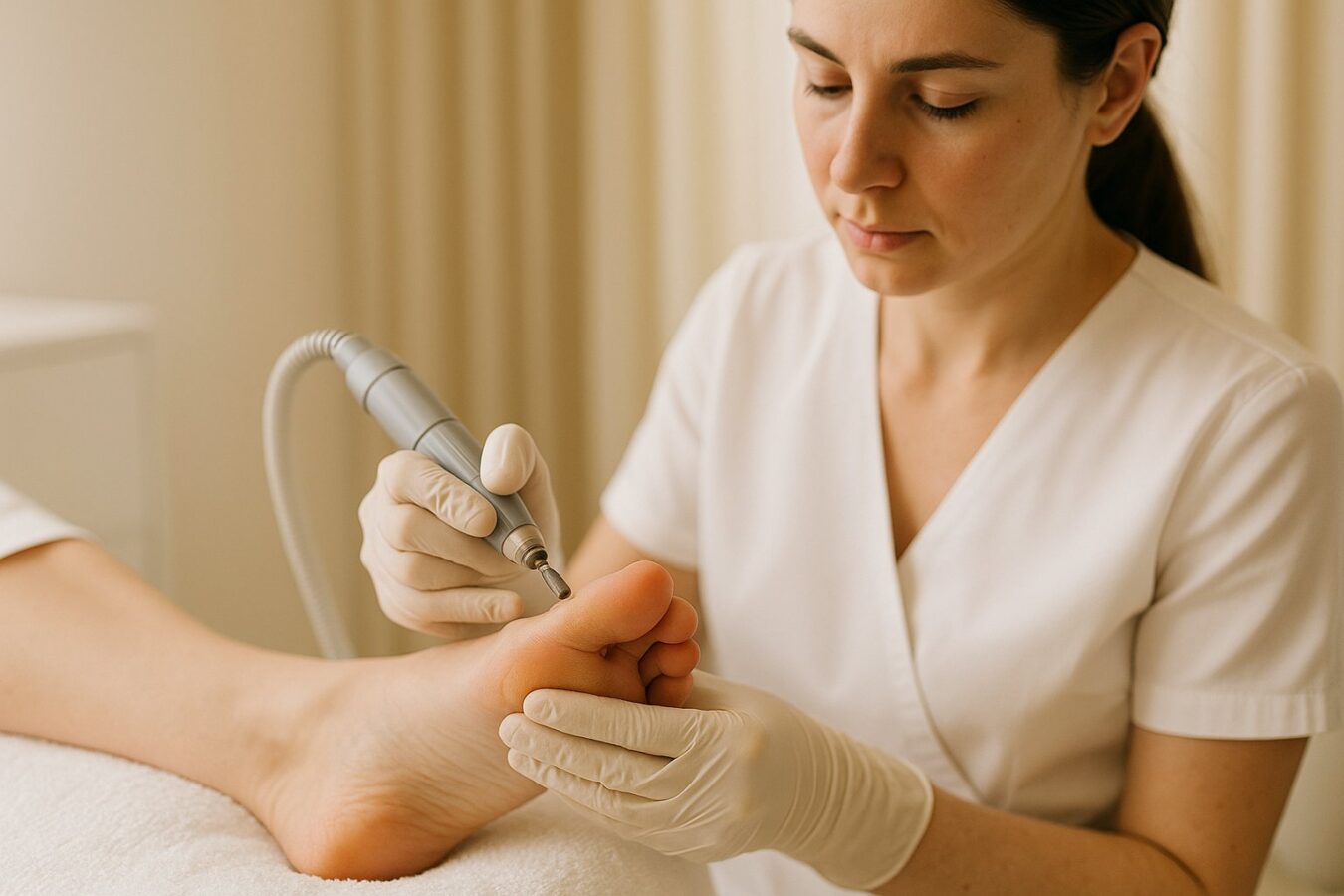
A corn is a patch of thickened, hardened skin that forms where shoes constantly press on the skin or a tool rubs against it. It is essentially a protective reaction, but the corn itself makes walking difficult, hurts, and cracks. At Medest, corns and calluses are treated by a podologist, who identifies the type of corn, removes it gently, and explains how to keep it from coming back.
Common concerns
- hard corns and calluses on the soles, heels, and toes;
- core corns with a dense “root” that extends deep into the skin and hurts when you walk;
- corns between the toes;
- corns that keep coming back after home corn pads and pumice stones;
- plantar warts, which are easily mistaken for corns.
Corns most often appear on the feet and less often on the hands and elbows. They form in the outer, keratinized layer of the skin, but if left alone for a long time, inflammation can develop beneath a corn, and deep cracks open the way to infection.
How the procedure works
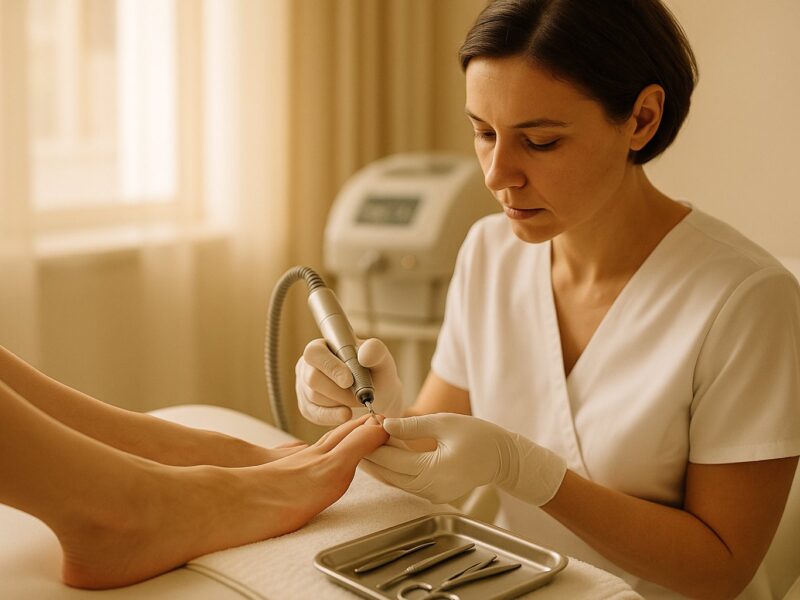
First, the podologist examines the foot and makes a diagnosis: an ordinary corn, a core corn, or a wart. This determines how it will be removed. The skin is then softened, and the hardened areas are removed layer by layer with a medical device. With a core corn, the core itself is also removed; otherwise the corn will come back. Treatment is usually done as part of a device-assisted pedicure, so other problem areas of the foot are taken care of at the same time.
If a corn is deep or complicated, the specialist may suggest other methods: excision, removal by freezing (with liquid nitrogen), or electrocoagulation. The right method is chosen after the examination.
Plantar warts
A wart on the sole looks like a corn, but it is caused by a virus and is treated differently. The podologist tells them apart during the examination. Warts are removed separately, and the price is calculated per wart.
Who performs the treatment
Mirzoyan Hasmik is the podologist at Medest. She treats corns, calluses, cracks, and ingrown and damaged nails, and performs medical pedicure.
How to keep corns from coming back
A corn forms where there is pressure, so it is important to find the source. The podologist will look at how load is distributed across your foot and suggest what to change: shoes, insoles, or home care. The number of visits and the interval between them are determined at the consultation. For some people one treatment is enough, while others need regular care.
- wear shoes that fit, without stiff seams over pressure points;
- do not cut corns with a blade or burn them off yourself;
- if you have diabetes, do not treat corns at home; have a specialist examine your feet.
Learn more in the podologist’s articles: why calluses and core corns keep coming back and corns and calluses from summer shoes.
- hard corns and calluses;
- core corns and corns between the toes;
- pain when walking caused by hardened skin;
- plantar warts;
- preventive foot care if you are prone to corns.
Before the procedure, the specialist takes into account:
- acute inflammation, open wounds, or pustules in the treatment area;
- acute infectious diseases with fever;
- uncontrolled diabetes and marked circulatory problems in the legs (in these cases treatment is performed with particular care and only when indicated);
- blood clotting disorders (for excision and wart removal).
The doctor will go over the full list at the consultation.
Prices
| Name | Price |
|---|---|
| Removal of plantar warts, 1 unit | 5 000 ֏ |
| Удаление подошвенных бородавок азотом, средней степени 1 ед | 6 000 ֏ |
| Удаление мозолей, 1ой степени | 3 000 ֏ |
| Удаление мозолей, 2ой степени | 4 000 ֏ |
| Удаление мозолей, 3ей степени | 5 000 ֏ |
| Консультация у подолога | 5 000 ֏ |
Prices valid as of 23.10.2026. The doctor confirms the exact cost after examination.
Questions & answers
What is the difference between a corn and a callus?
A callus is a large area of hardened skin, usually on the sole under the toes or on the heel. A corn is smaller and denser, and a core corn has a "root" that extends deep into the skin. They are treated differently, so an examination comes first.
Is corn removal painful?
Device treatment usually does not cause strong sensations: the skin is softened beforehand and removed in layers. Removing a core or a wart may feel more sensitive, and the specialist will let you know in advance.
Why does a corn come back?
Most often because the core was left behind or the cause was not addressed: tight shoes, the way you walk, or extra load on one part of the foot. The podologist removes the corn completely and suggests what to change so that it does not form again.
Can I remove a corn at home with a corn pad?
A soft, superficial corn can sometimes be handled at home. With a core corn, a wart, or diabetes, it is better to see a podologist right away: acid corn pads can damage healthy skin.
How much does corn removal cost?
Current prices are listed in the table on this page. The specialist will give you an exact plan and cost after the examination.
Performed by

Leave your phone number — our administrator will pick the doctor and time
You are booking: Treatment of corns
We call back during working hours. Prefer to write? Use WhatsApp.
By clicking the button you agree to the processing of personal data.