
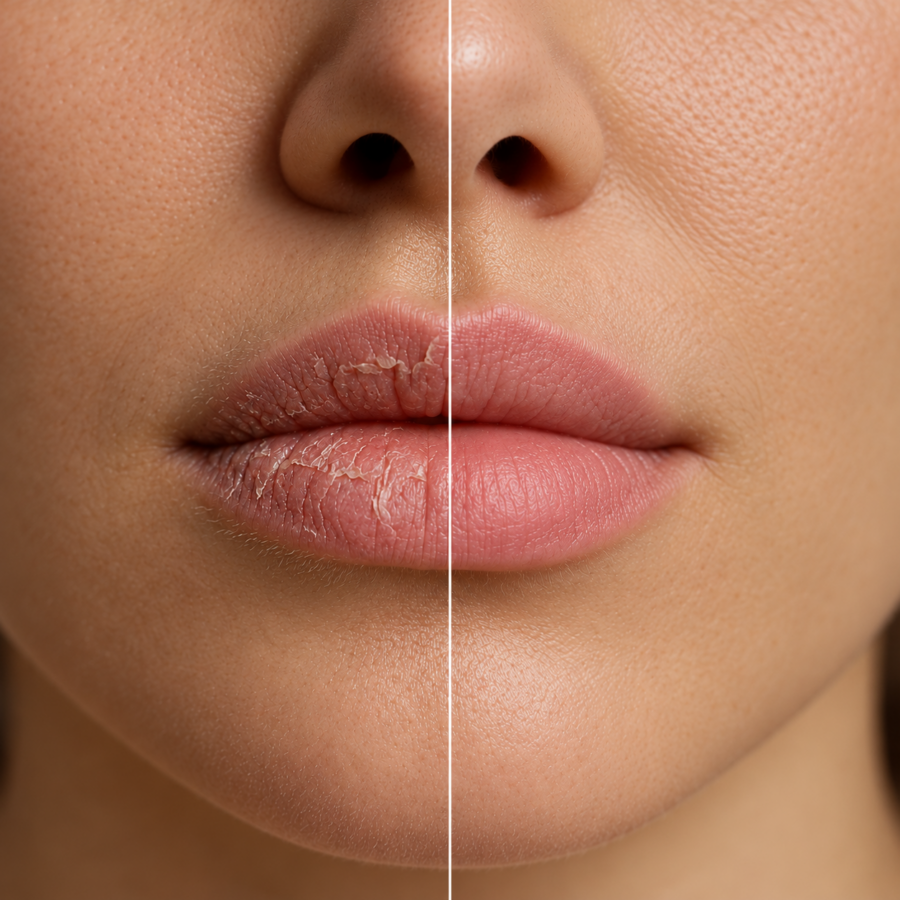
The vermilion of the lips is thin, contains very few sebaceous glands, and loses moisture quickly. Cold, wind, dry air, and lip licking increase evaporation. Persistent fissures, however, may be associated not only with the weather but also with contact, atopic, actinic, or infectious cheilitis.
If the lips do not recover, it is important to review lip balms, toothpaste, color cosmetics, medications, and associated symptoms. Constantly trying new products may itself maintain a contact reaction.
Why Do Lips Become Dry?
Common contributing factors include:
- cold, wind, and indoor heating;
- licking or biting the lips;
- irritating fragrances and flavorings;
- retinoids and certain other medications;
- inadequate ultraviolet protection;
- allergic contact dermatitis;
- atopic dermatitis;
- fungal or bacterial infection at the corners of the mouth.
Nutritional deficiencies may sometimes contribute to angular cheilitis, but vitamins should not be prescribed without appropriate assessment.
Weather-Related Dryness or Cheilitis?
| Feature | Ordinary dryness | Possible cheilitis |
| Association with weather | Clear; improves with protection | May persist regardless of the weather |
| Distribution | Often affects the entire lip surface | Localized patches, the vermilion border, or mouth corners |
| Additional symptoms | Tightness and superficial flaking | Itching, burning, weeping, crusting, painful fissures |
| Response to lip balm | Usually improves | May worsen because of an allergen or irritant |
This table cannot establish a diagnosis. If symptoms persist, a dermatologist may recommend allergen avoidance, testing for infection, or further assessment.
Restoring the Protective Layer
During active irritation, simple products without fragrance, menthol, camphor, or active acids are preferable. An occlusive base reduces water loss and protects fissures from the external environment. Ultraviolet protection is important during the day, particularly in the mountains and after procedures around the mouth.
Flaking skin should not be removed with the teeth or a scrub. Repeated injury initiates another inflammatory cycle and delays healing.
When Are Cosmetic Procedures Contraindicated?
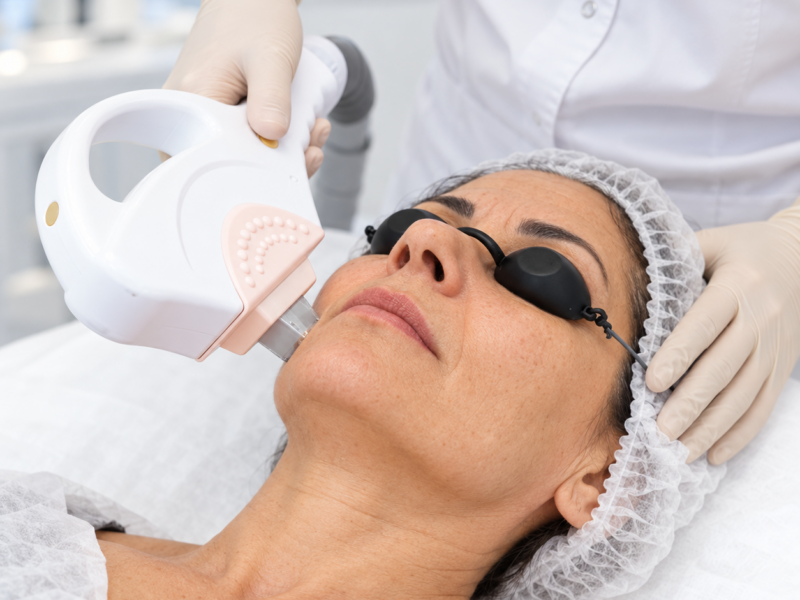
Injectable correction, laser treatment, and chemical peels are not performed when active cheilitis, herpes, weeping, or infection is present. The cause should be identified and the skin allowed to recover first.
Procedures for the perioral area do not treat lip dryness. They may address aesthetic concerns, but they do not replace treatment of a dermatological disorder.
Signs That Require an In-Person Consultation
Assessment is needed if a fissure bleeds, persists for more than two weeks, repeatedly occurs in the same place, or is accompanied by a thick crust. Color changes, induration, a nonhealing area, or persistent scaling of the lower lip require evaluation by a dermatologist.
Angular cheilitis at the corners of the mouth may be associated with irritation, moisture, Candida, or bacterial infection. In such cases, a protective ointment alone may not be sufficient.
Ingredients That Commonly Irritate the Lips
Menthol, camphor, cinnamon, essential oils, fragrances, and flavorings may create a refreshing sensation but can maintain irritation. Ingredients in toothpaste, mouthwash, lipstick, and dental materials may also act as allergens.
If contact cheilitis is suspected, the physician may recommend temporarily reducing the number of products and using a neutral protective base. Recurrent symptoms may warrant patch testing.
The Role of Habits and Breathing
Licking briefly makes the lips feel moist, after which saliva evaporates and increases dryness. Biting and pulling at flakes repeatedly injure the epithelium. Mouth breathing caused by nasal obstruction also increases evaporation and dryness.
Changing these habits is part of treatment. If the patient wakes with pronounced dryness of the mouth and lips, nasal breathing and current medications should be discussed with a physician.
How Is Sun Exposure Related to Actinic Cheilitis?
Chronic ultraviolet exposure is particularly evident on the lower lip. Persistent roughness, pale or red patches, loss of definition at the vermilion border, and nonhealing fissures require assessment. Actinic cheilitis is considered a potentially premalignant condition.
A lip balm with SPF reduces ultraviolet exposure but does not treat an established suspicious lesion. Such a lesion must be evaluated by a dermatologist.
Frequently Asked Questions
Can a Lip Scrub Be Used?
Not when fissures or inflammation are present. Mechanical exfoliation increases damage and burning.
Why Does Lip Balm Help Only Briefly?
It may reduce water loss but does not address contact allergy, infection, or habitual lip licking. Recurrent symptoms require diagnosis.
Do Lips Need SPF in Autumn?
Yes, particularly during prolonged time outdoors, in the mountains, and in people prone to actinic damage.
When Can Procedures Around the Mouth Be Performed?
After fissures have healed completely and active infection or dermatitis has been ruled out.
If lip dryness does not resolve or fissures recur, book a consultation at Medest. The physician will assess the skin, rule out active cheilitis, and determine when aesthetic procedures can be resumed safely.