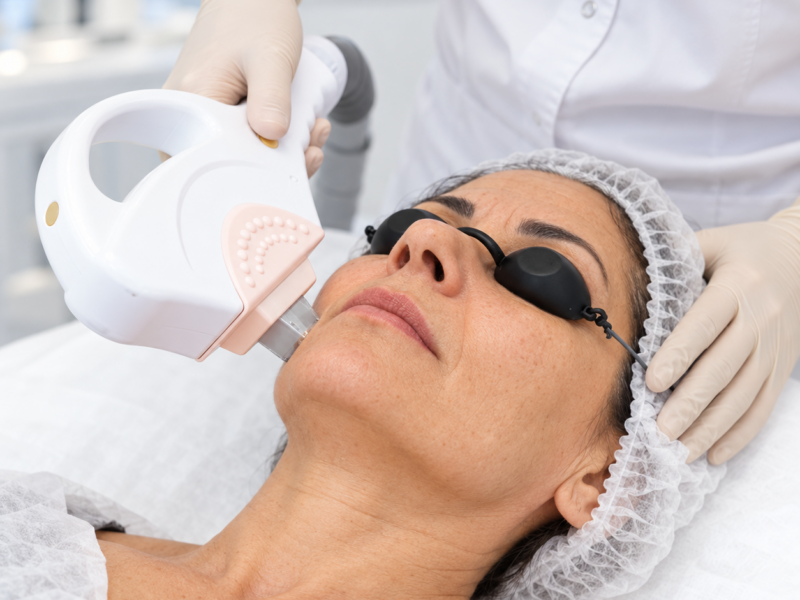

Fotona is a laser platform, not a single procedure with one standard recovery time. It supports protocols with different wavelengths, treatment depths, and intensities. The skin may settle relatively quickly after a gentle nonablative procedure, while fractional treatment requires more recovery time.
The decision about makeup is therefore based on the condition of the skin surface rather than the name of the device. Cosmetics must not be applied over weeping, open microinjuries, or crusted areas.
How Does the Protocol Affect Recovery?
Nonablative procedures heat tissue without substantial removal of the epidermis. They usually involve less social downtime, although redness and swelling may still occur. Fractional treatment creates microscopic thermal zones and may cause roughness, flaking, and more prolonged erythema.
Different areas also respond differently. Eyelid skin is thinner and more prone to swelling, while scar treatment may be performed more intensively than a protocol intended to improve overall skin quality.
When Can Makeup Be Resumed?
The following clinical signs should guide the decision:
· the skin surface is fully closed;
· there is no weeping or pinpoint bleeding;
· no blisters or increasing pain are present;
· crusts are separating naturally rather than being removed with cosmetics;
· a test application does not cause pronounced burning;
· the physician has approved the return to makeup.
Even mineral powder is not sterile. Brushes, sponges, and reusable applicators may contaminate recently treated skin.
Returning to Work and Social Activities
The ability to work is usually unaffected, but appearance depends on the protocol. If the job involves sun exposure, dust, high temperatures, or mandatory full-coverage makeup, more recovery time should be allowed.
Overheating, intense exercise, and friction should be avoided after treatment. Dry, air-conditioned office air may increase tightness, so a recovery product is used according to the physician’s plan.
Skin Recovery After Laser Treatment
During the first few days, use gentle cleansing and the products prescribed by the physician. Acids, retinoids, scrubs, and alcohol-containing formulas are avoided until the skin has fully recovered. Crusts should not be concealed with heavy foundation or pulled off during makeup removal.
Sun protection is essential, particularly for patients prone to pigmentation. If active sun exposure cannot be limited, the timing of the procedure should be reconsidered in advance.
When Should You Contact the Clinic?
Moderate redness and a sensation of warmth may be expected. Increasing pain, blisters, purulent discharge, pronounced swelling, or a sudden color change require assessment. Cosmetics should not be used to conceal these symptoms.
Before an important event, the physician recommends allowing extra time. A mild reaction to a previous procedure does not guarantee identical recovery after a more intensive protocol or treatment of another area.
Why Do Treatment Areas Recover Differently?
The periorbital area may swell more even though the treated surface is small. Redness and roughness are often more noticeable on the cheeks. The neck and décolleté may recover more slowly because of skin characteristics and constant contact with clothing.
Parameters used for scars may be more intensive than those selected for radiance and overall skin quality. Another person’s experience or photographs on social media cannot predict an individual return-to-work timeline.
Cosmetic Hygiene After the Procedure
Brushes should be cleaned and soiled sponges replaced before makeup is resumed. Testers and shared tools should not be used. Long-wear, full-coverage products require more active removal, so the physician may recommend cosmetics that are easier to remove during the early recovery period.
Makeup should be removed without rubbing. If a cotton pad catches on flakes or crusts, the skin surface is not yet ready for the usual cosmetic routine.
What Affects the Degree of Swelling?
Swelling may be more pronounced after eyelid treatment, in people prone to fluid retention, after alcohol or intensive exercise, and when sleeping face down. The physician will advise on head position and appropriate cooling if the protocol requires it.
Diuretics or anti-inflammatory medications should not be taken independently for cosmetic reasons. An unusually pronounced or asymmetric reaction requires contact with the clinic.
Planning the First Procedure
If this is the first Fotona procedure, it is sensible to choose a date without important meetings in the following days. Even when downtime is expected to be short, individual redness or swelling may last longer than average. A follow-up visit should also be included in the plan.
For repeat treatment, the patient’s previous response is taken into account, but the physician may change the depth or treatment area. The patient should clarify in advance whether the new protocol will be comparable in intensity.
If work requires continuous use of a mask or protective helmet, or time in a hot environment, this should be discussed before treatment. Friction and overheating may prolong redness, and the physician may suggest a more suitable date.
More information about the available protocols is provided on the fractional laser rejuvenation page. Book a consultation at Medest to discuss recovery time, makeup, and returning to work after your specific Fotona procedure.