PRP Therapy in Summer: When to Schedule It Before a Holiday and How to Combine It with Biorevitalization
Platelet-rich plasma therapy, or PRP, is an injectable procedure that uses the patient’s own plasma containing an increased concentration of platelets. Once activated, platelets release growth factors involved in tissue-repair signaling processes. In aesthetic medicine, PRP is used to improve skin quality and in trichology. The procedure can be performed in summer, but not on sunburned skin or immediately before an active beach holiday.
PRP and biorevitalization are not two names for the same procedure. PRP uses material derived from the patient’s blood, while biorevitalization involves the injection of a registered product, most often based on hyaluronic acid. The choice depends on the objective and the condition of the skin.
How PRP Therapy Is Performed
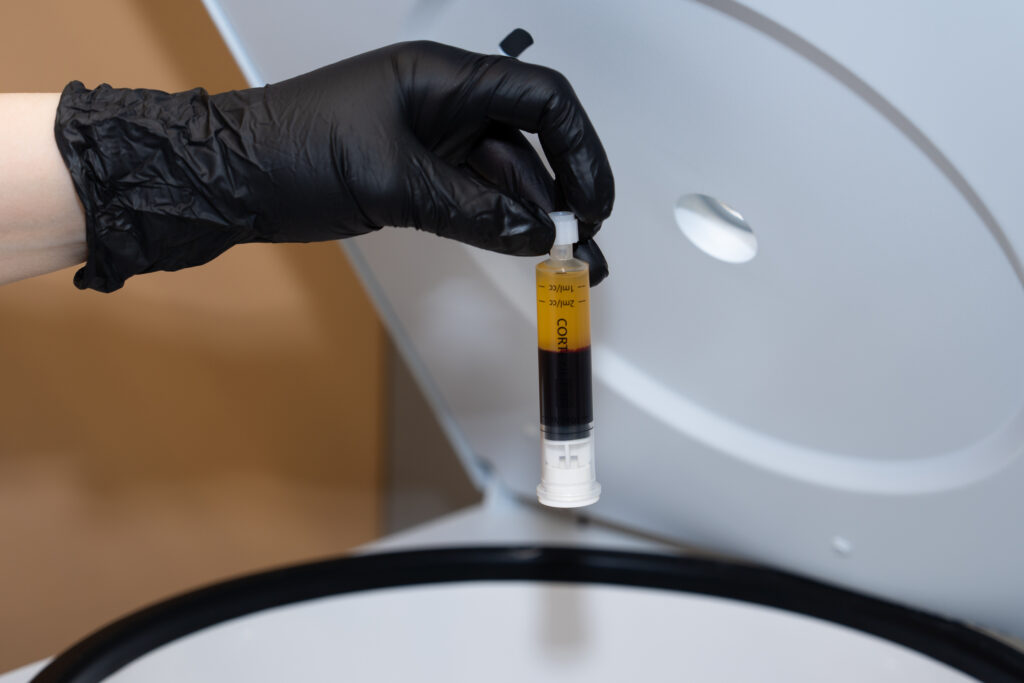
First, venous blood is collected into special tubes. After centrifugation, the physician obtains the plasma fraction intended for injection. The skin is cleansed, treated with an antiseptic, and injected according to the selected protocol. At Medest, PRP is performed for the face and scalp; the specialist determines the number of tubes and treatment areas.
The quality of the procedure depends not only on the use of ‘the patient’s own plasma,’ but also on correct blood collection, appropriate tubes, centrifugation settings, sterility, and injection technique. The phrase ‘your own material’ does not mean that all risks are absent. Possible effects include pain, bruising, swelling, infectious complications if aseptic technique is compromised, and individual reactions to the procedure itself.
What Concerns Can Facial PRP Address?
The physician may include PRP in a treatment plan for reduced tone, uneven texture, early age-related changes, or during a period of skin recovery. The effect is not equivalent to immediate wrinkle filling: PRP is not a conventional filler and does not contour the cheekbones or lips.
Results should be assessed over time. They are influenced by age, skin quality, smoking, sun exposure, comorbidities, the characteristics of the prepared plasma, and the number of sessions. A single appointment does not guarantee the same result for every patient.
Can PRP Be Performed in Summer?
Injections do not produce controlled exfoliation like a chemical peel, but they do cause micro-injuries to the skin. Redness, papules, tenderness, and bruising may remain after the session. Tissue reactions are more difficult to assess on recently tanned skin, and sunburn is an injury that requires the procedure to be postponed.
PRP is best postponed if:
- there is sunburn, active irritation, herpes, or pustular lesions;
- the patient has an acute infection;
- a beach visit, steam bath, sauna, or swimming pool is planned within the next few days;
- the face cannot be protected from the sun consistently;
- a coagulation disorder or another contraindication has been identified.
During the consultation, disclose all medications and supplements that affect blood clotting. Prescribed medication must not be stopped independently for an aesthetic procedure.
How Far in Advance of a Holiday Should You Book?
Do not schedule PRP for the day before a flight or seaside trip. It is sensible to allow at least one to two weeks for papules and bruising to resolve, although the physician may recommend a longer interval. If the holiday will involve daily sun exposure, swimming, and high physical activity, it is safer to have the procedure after returning.
The Patient Pathway for PRP
- Consultation and assessment of the skin condition.
- Review of medications, medical conditions, and tendency to bruise.
- The procedure is performed on a day when there is no inflammation or sign of infection.
- Recovery without overheating, swimming pools, or active sun exposure.
- Follow-up assessment at the time specified by the physician.
- The next stage is planned only after the skin’s response has been assessed.
Can PRP Be Combined with Biorevitalization?
Yes, these methods may be included in one plan, but they do not have to be performed at the same time. PRP uses platelet-derived growth factors, while biorevitalization involves hyaluronic acid injections to address signs of dehydration. The physician determines which objective is the priority and spaces the procedures appropriately to avoid increasing the number of punctures and to assess the response correctly.
The protocol depends on the biorevitalization product, treatment area, tendency to swell, and other procedures. If the skin is irritated after sun exposure, the barrier is restored and sunburn is excluded before a decision about injections is made. Trying to ‘do everything at once’ before a holiday does not accelerate biological processes.
What to Do After PRP
During the first few hours, do not touch the face with unwashed hands or apply products that have not been approved by the physician. Do not puncture papules or massage injection sites. Temporarily avoid overheating, intense exercise, swimming pools, and active sun exposure for the period specified by the specialist.
Mild tenderness and bruising usually resolve on their own. Increasing pain, progressive swelling, hot red skin, purulent discharge, or deterioration in general well-being require contact with the clinic. Do not attempt to treat this type of reaction with cosmetic products.
At Medest, PRP therapy is available within injectable aesthetic medicine and trichology. Book a consultation in Yerevan: the physician will determine the indications, select a safe date before your holiday, and, if necessary, prepare a staged plan combining PRP and biorevitalization.
| Code | Service name | Cost, ֏ |
|---|---|---|
| A14.01.013 |
A14.01.013
Плазмотерапия |
30 000 |