How the Sun Affects Collagen and Pigmentation: What to Do About Photoageing
Photoageing refers to cumulative changes in the skin caused by ultraviolet radiation. Sun exposure accelerates collagen breakdown, impairs the skin barrier, and alters the function of pigment-producing cells. The main evidence-based way to slow this process is comprehensive photoprotection; procedures are selected according to the clinical signs, such as dryness, pigmented spots, visible vessels, wrinkles, or reduced skin density.
How Photoageing Differs from Natural Ageing
Natural ageing is associated with age, genetics, and metabolic changes. Photoageing is determined by the cumulative dose of ultraviolet radiation. Both processes occur simultaneously, but sun damage is particularly noticeable on the face, neck, décolletage, and hands—areas that are often exposed.
Typical signs include uneven skin tone, sun spots, dryness, roughness, visible blood vessels, reduced elasticity, and wrinkles. The absence of sunburn does not mean the absence of damage: chronic exposure to small doses of ultraviolet radiation also affects the skin’s structure.
How UVA and UVB Affect the Skin
UVA rays penetrate more deeply and play an important role in oxidative stress and changes in the dermal matrix. UVB rays have a stronger effect on the epidermis and are the main cause of sunburn, but they also damage DNA and affect pigmentation. A broad-spectrum product protects against both ranges.
Ultraviolet radiation increases the formation of reactive oxygen species and activates signalling pathways that increase the production of matrix metalloproteinases. These enzymes break down collagen and other components of the extracellular matrix. At the same time, the damaged environment prevents fibroblasts from maintaining normal collagen fibre renewal. The skin gradually loses density and firmness.
Why Pigmented Spots Appear After Sun Exposure
Melanin is a protective pigment produced by melanocytes. Ultraviolet exposure increases melanin production and alters its distribution. With repeated exposure, the process may become uneven, resulting in freckles, discrete “sun imprints”—lentigines—or larger areas of melasma.
Pigmentation may also develop after inflammation or skin injury. Therefore, an aggressive peel, laser treatment, or injectable procedure performed during a period of active sun exposure and irritation may sometimes result in post-inflammatory marks. The risk is particularly relevant for darker skin phototypes, but it cannot be completely excluded in anyone.
In melasma, visible light as well as ultraviolet radiation is relevant. Studies show that visible light can sustain pigmentation, particularly in people with darker skin. A dermatologist may therefore recommend a tinted sunscreen containing iron oxides.
Which Measures Really Protect Against Photoageing?
Photoprotection involves more than sunscreen. The World Health Organization recommends limiting time under intense midday sun, seeking shade, wearing covering clothing, a wide-brimmed hat, and sunglasses, and applying a broad-spectrum product to exposed areas. Sunscreen should not be used to prolong the duration of tanning.
The American Academy of Dermatology recommends a water-resistant, broad-spectrum product with SPF 30 or higher. It should be applied in a sufficient amount and reapplied as directed, after swimming and sweating. In a randomised study, daily sunscreen use for 4.5 years slowed the signs of skin ageing compared with discretionary use.
Can Damaged Collagen Be Restored?
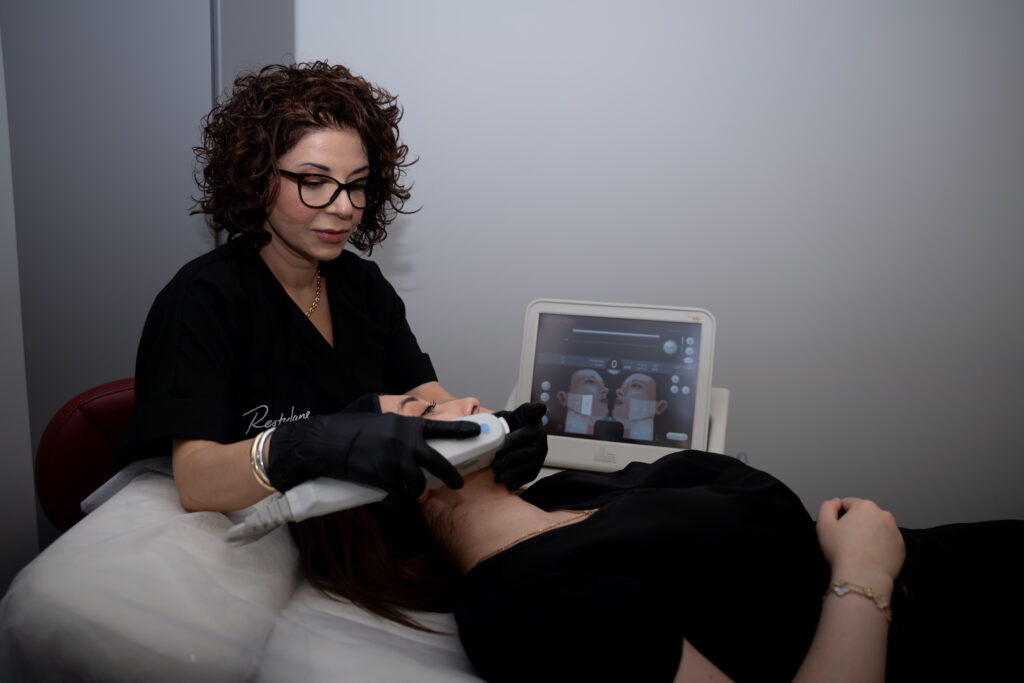
The visible effects of photodamage can be reduced: skin tone can be made more even, pigmented spots and vascular changes less noticeable, and skin texture improved. For this purpose, Medest offers IPL phototherapy for the face, neck, décolletage, and hands. For dehydrated skin, the physician may consider hyaluronic acid-based products, while remodelling methods may be considered for texture and wrinkles.
No procedure eliminates the need for photoprotection. If ultraviolet exposure continues, pigmented spots may return and changes in collagen may continue to accumulate. Device-based procedures and peels also have their own limitations related to skin phototype, tanning, and season.
How a Physician Selects a Procedure for Photoageing
- Identifies the predominant signs: pigmentation, visible vessels, dryness, wrinkles, or reduced skin density.
- Assesses the skin phototype, how recent the tan is, skin sensitivity, and the tendency to develop post-inflammatory marks.
- Differentiates melasma, solar lentigines, and post-inflammatory hyperpigmentation.
- Considers medications, skin conditions, and procedures that have already been performed.
- Plans the treatment sequence to avoid subjecting the skin to several potentially traumatic methods at the same time.
Frequently Asked Questions
Does the sun damage collagen even if the skin does not burn?
Yes. Sunburn is only one sign of excessive exposure. UVA radiation and repeated suberythemal doses also contribute to oxidative stress and the activation of collagen-degrading enzymes.
Does tanning help prepare the skin for sun exposure?
No. A tan is the skin’s response to damage and provides only limited natural protection. It does not replace clothing, shade, or sunscreen.
Can summer pigmentation be removed with IPL or laser treatment?
These methods can sometimes be effective, but a diagnosis is required first. In melasma or a tendency to develop post-inflammatory hyperpigmentation, incorrectly selected settings may worsen the condition.
Do collagen injections protect against photoageing?
Injectable procedures may be used to correct individual signs, but they do not block ultraviolet radiation or prevent DNA damage. Prevention begins with photoprotection.
Book a consultation at Medest to determine the type of pigmentation and select an appropriate correction method. If clinically indicated, you can schedule IPL phototherapy for the appropriate treatment area.