
A chronic condition is not always an absolute contraindication to low-level laser therapy for hair loss, but it may itself be a direct cause of shedding. The starting point is therefore not clearance for a device-based procedure, but diagnosis of the type of alopecia and assessment of the patient’s overall health.
Light-based methods have been studied most extensively in androgenetic alopecia. The evidence and clinical approach differ for telogen effluvium, alopecia areata, scarring alopecia, and scalp disorders. The procedure should not delay investigation of anemia, thyroid dysfunction, or systemic inflammation.
Different Types of Hair Loss Require Different Strategies
Androgenetic alopecia develops gradually: hair becomes finer and density decreases in characteristic areas. Telogen effluvium often begins several months after an infection, surgery, rapid weight loss, severe stress, or a change in medication.
Clearly defined areas of hair loss require evaluation for an autoimmune process. In scarring alopecia, follicles are destroyed, making early medical diagnosis especially important. A universal “root-strengthening” course is not appropriate in these situations.
What Is Assessed Before Laser Treatment?
During the consultation, the physician takes a medical history, examines the scalp, and performs trichoscopy. Laboratory tests may be ordered when indicated. Patients should report:
- the exact chronic diagnosis and how well it is controlled;
- all current medications and recent dosage changes;
- dates of surgery, infections, and episodes of high fever;
- pregnancy or breastfeeding;
- oncological conditions and ongoing treatment;
- photosensitivity, skin disorders, and scalp eruptions;
- implants or medical devices if the protocol involves additional forms of energy.
A stable, well-controlled condition and a decompensated illness require different approaches. In some cases, clearance from the relevant specialist may be requested.
What Low-Level Laser Therapy Can and Cannot Do
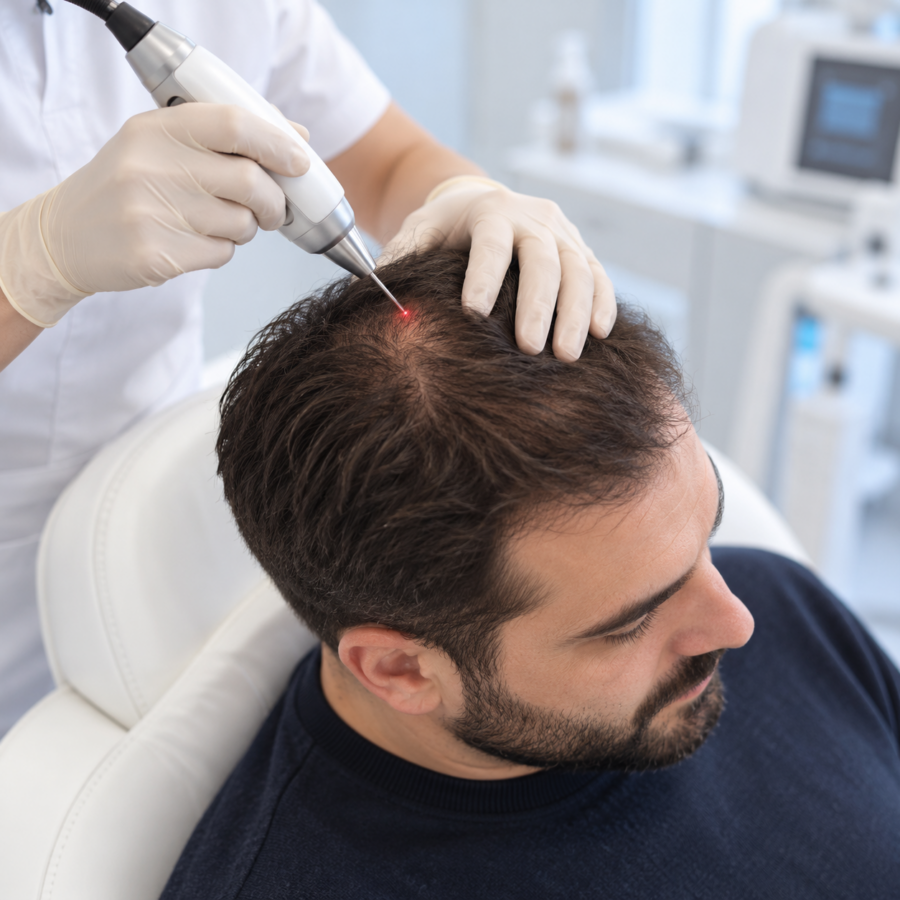
Low-level light treatment does not generate pronounced heat and has been studied as an adjunctive method for certain forms of nonscarring hair loss. Studies assess hair density and shaft thickness, but protocols vary in wavelength, power, frequency, and course duration.
Results from one device therefore cannot be applied to every laser system. It is also inappropriate to promise new hair growth in areas where follicles have been irreversibly lost.
Combining Laser Treatment with Medical Therapy
For androgenetic alopecia, laser stimulation may be considered alongside treatments whose effectiveness is supported for the individual patient. Nutritional deficiencies should be corrected when present. If thyroid disease contributes to hair loss, control of the underlying condition is essential.
Professional lotions are used only as part of a prescribed regimen. For example, DSD De Luxe Wondercell Lotion 3.4.3.A may be recommended by a specialist to support the scalp and hair, but it does not replace diagnosis of the cause of hair loss or treatment of systemic disease.
Monitoring the Results of a Treatment Course
Response is assessed using standardized photographs and trichoscopy rather than sensations after a single session. Hair grows slowly, so follow-up points are scheduled with the hair growth cycle in mind.
If shedding increases or patches, itching, pain, or inflammation develop, the plan should be reassessed. Continuing a device-based course without repeat evaluation is not advisable.
Chronic Conditions and Treatment Limitations
In autoimmune disease, the activity of the condition and any immunosuppressive therapy must be considered. In patients with cancer, a decision is made only in coordination with the treating specialist. For epilepsy or photosensitivity, the characteristics of the light source and individual risks are reviewed.
Decompensated diabetes, severe anemia, and significant endocrine disorders may affect both hair condition and tissue recovery. The general condition should be stabilized first. A diagnosis does not always prohibit the procedure, but inadequate disease control makes the outcome less predictable.
Why Should Results Not Be Judged Too Early?
Hair passes through growth, resting, and shedding phases. Even effective treatment cannot change this cycle within a few days. During the first weeks, the patient may see no difference, while the subjective amount of hair in the shower varies greatly with washing frequency and hair length.
Consistent parting, lighting, camera distance, and trichoscopy data should be used for monitoring. Objective measurement helps prevent both premature discontinuation and unjustified continuation of an ineffective course.
Scalp Safety During the Course
Treatment is not performed over pustules, weeping lesions, pronounced excoriations, or active herpes. If a prescribed topical product causes burning, this should be discussed with the specialist rather than masked by another procedure.
Headwear and styling products should not traumatize the scalp immediately after treatment. Specific restrictions depend on the protocol and are provided during the appointment.
At Medest, a physician will examine the scalp, identify the type of hair loss, and assess whether the procedure is compatible with chronic conditions and medications. Book a scalp and hair treatment consultation before starting a device-based course.