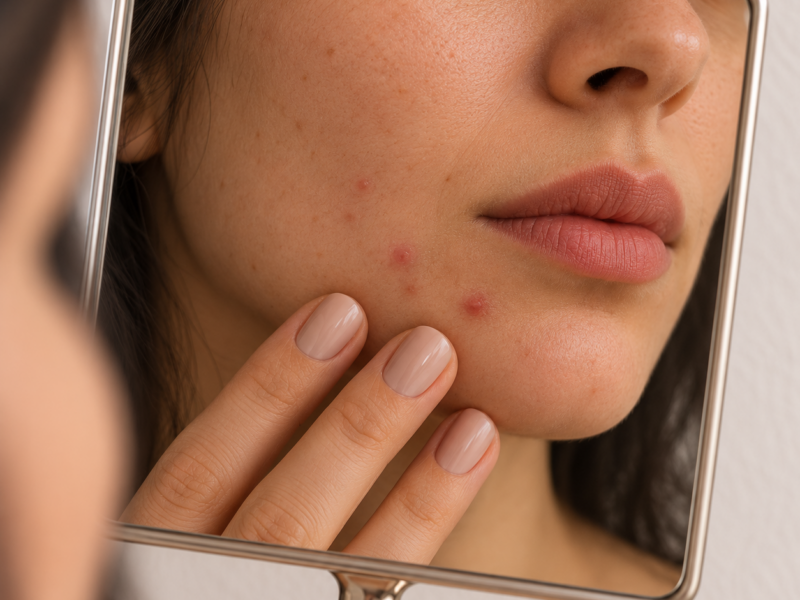

Why Skin Looks Dry and Dull After a Holiday
Ultraviolet light damages cells, increases oxidative stress, and activates enzymes involved in collagen breakdown. Heat, wind, sea and chlorinated water, air conditioning, and frequent cleansing add to the dryness. After a trip, skin may feel rough and sensitive, hold moisture less well, and fine lines may look more noticeable.
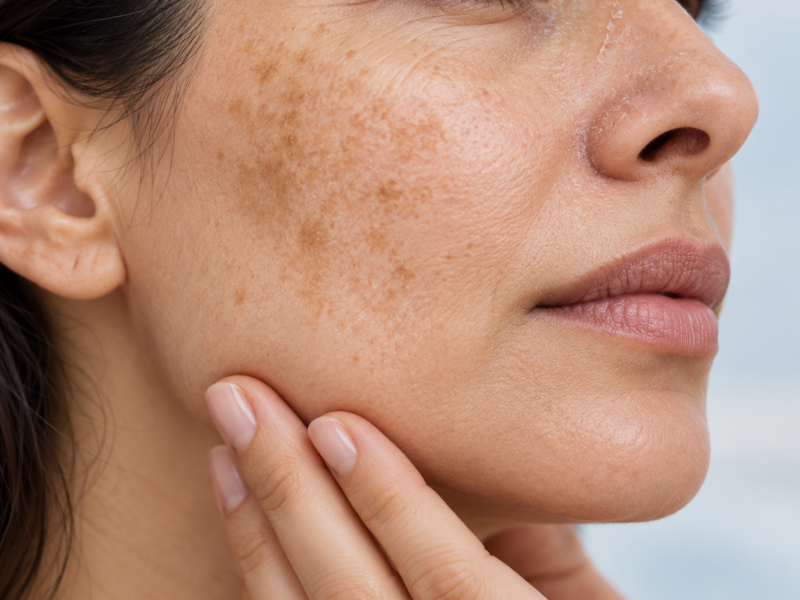
Sun-related pigment spots develop for different reasons. A solar lentigo is a single flat brown spot with distinct borders, a kind of “imprint” of accumulated sun exposure. Melasma more often looks like a larger, uneven “cloud” of pigment on the cheeks, forehead, or above the upper lip, and it can worsen under the influence of light and hormonal factors. This is an illustrative comparison, not a way to self-diagnose: the exact type of spot is determined by a doctor, because correction approaches differ.
First, Rule Out Sunburn
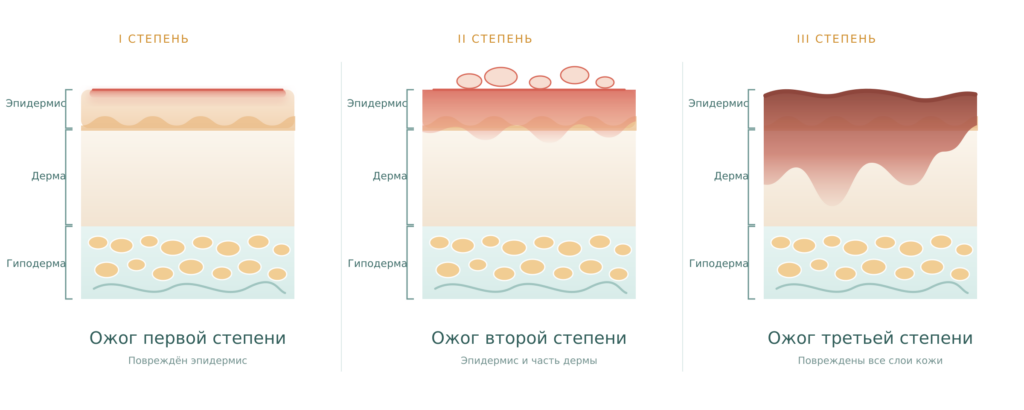
Sunburn is acute ultraviolet damage to the skin. For a mild burn, a cool shower or compress, a gentle alcohol-free moisturizer, and staying out of the sun until the redness fades are recommended. Blisters should not be popped. Marked swelling, multiple blisters, severe pain, fever, weakness, or feeling worse call for medical care.
While redness, burning, and tenderness persist, avoid scrubs, acids, retinoids, brushes, and at-home peels. Injections and device-based treatments on inflamed skin are also postponed. Trying to get rid of peeling faster can increase irritation and raise the likelihood of post-inflammatory pigmentation.
Restoring Your Skin at Home After Sun Exposure
If you have marked pigmentation, irritation, or a tendency toward allergic reactions, it is best to choose products only after consulting a doctor. At Medest clinic, dermatologists will assess your skin, determine its type and needs, and help you put together a suitable home-care routine.
Gentle Cleansing
Use your usual cleanser, without abrasive particles or harsh degreasing. Wash with cool or lukewarm water and do not rub your face with a towel. If cleansing causes burning, simplify your routine for a while and discuss the symptoms with a dermatologist.
Hydration and Barrier Repair
Neutral creams or emulsions that your skin has tolerated well before are a good choice. Humectants help reduce the feeling of tightness, while lipids and occlusive ingredients limit water loss. There is no need to use several serums at once: after irritation, a short routine is usually better tolerated.
Daily Sun Protection
Choose a broad-spectrum product with SPF 30 or higher, apply it to exposed areas, and reapply as directed, especially after swimming and sweating. Combine sunscreen with shade, clothing, a hat, and sunglasses. For melasma, a doctor may recommend a tinted sunscreen with iron oxides, since visible light can also sustain pigmentation.
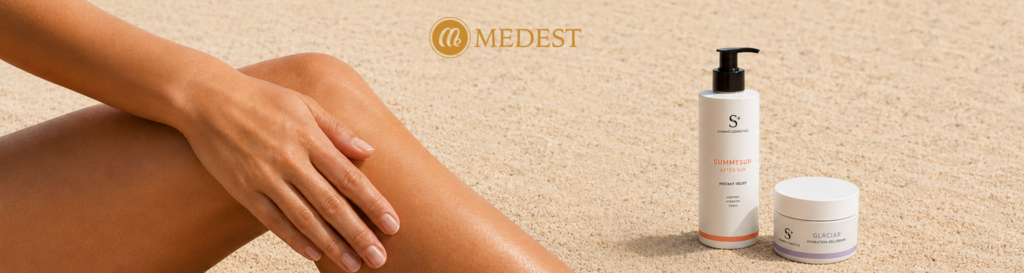
At the professional skincare online store Skinaura, you can choose and order products to restore your skin after sun exposure: for deep skin hydration, strengthening the protective barrier, soothing, and daily sun protection.
When You Can Return to Active Skincare
There is no universal day when everyone can go back to acids or retinoids. The guide is the absence of pain, redness, burning, and noticeable peeling. Active products are reintroduced gradually, one at a time, starting with the concentration you tolerated before. If pigmentation has appeared for the first time, is spreading quickly, or looks unusual, a diagnosis comes first.
Which Skin Treatments Are Used After a Holiday
Biorevitalization
If dryness, tightness, and reduced elasticity remain after recovery, a doctor may consider biorevitalization. Medest offers Restylane Vital, RRS Hyalift, and MesoXanthin F199; the product is chosen after an examination. The procedure does not treat sunburn and does not remove every type of pigmentation.
Mesotherapy
For mesotherapy, Medest uses products such as RRS HA Tensor lift, RRS HA Eyes, RRS HA Whitening, and Reparestim HA TD. They are designed for different goals, so the doctor selects the product after an examination rather than as a universal “cure-all cocktail.”
IPL, Lasers, and Chemical Peels
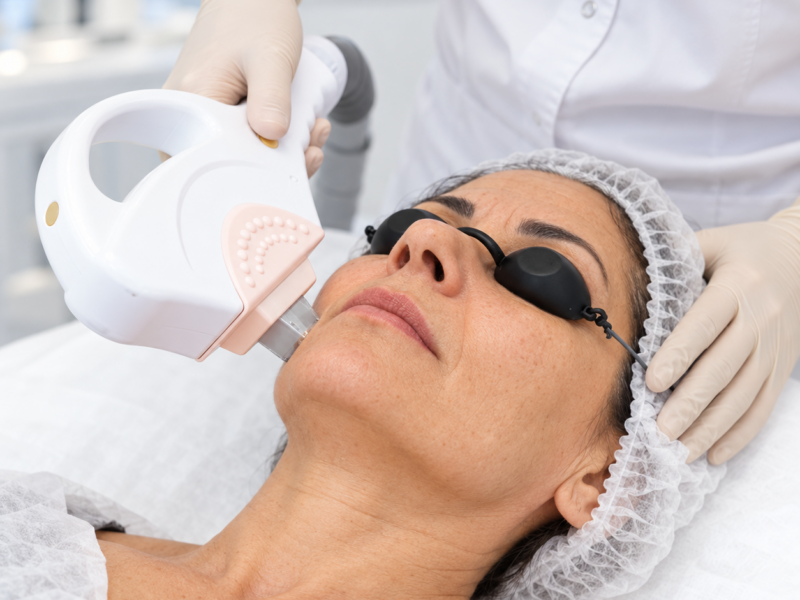
IPL phototherapy at Medest is performed on the face, neck, décolletage, and hands for pigmentation and vascular changes. A fresh tan, inflammation, and a tendency toward post-inflammatory hyperpigmentation influence the choice of technology and settings. Treatment that is too aggressive can make spots worse.
A Plan for Restoring the Skin Barrier
- Redness or sunburn: cooling, simple moisturizing care, no sun exposure, and medical care for severe symptoms.
- Skin is calm but dry: barrier repair and a consultation about hydrating treatments.
- Spots have appeared: diagnosis of the pigmentation type, consistent sun protection, and only then a correction plan.
- Wrinkles and loss of firmness are a concern: assessment of the degree of photodamage and selection of the sequence of injectable or device-based methods.
Frequently Asked Questions
Can I have biorevitalization right after I get back?
If your skin is not sunburned and is completely calm, you can discuss the procedure with your doctor. If there is redness, pain, peeling, or inflammation, recovery comes first.
Do I need a peel after a holiday?
Not necessarily. A peel is chosen based on indications, skin type, and the nature of the pigmentation. On irritated or recently tanned skin, it may do more harm than good.
Can pigmentation be removed in a single treatment?
The correction plan depends on the type and depth of the pigment, your skin phototype, and light exposure. For a noticeable and lasting result, a doctor may combine sun protection, home care, and suitable treatments.
Book a consultation at Medest: a doctor will assess your skin and create a recovery plan. Depending on indications, it may include biorevitalization, mesotherapy, or IPL phototherapy.