Poly-L-Lactic Acid: How to Stimulate Your Own Collagen Production
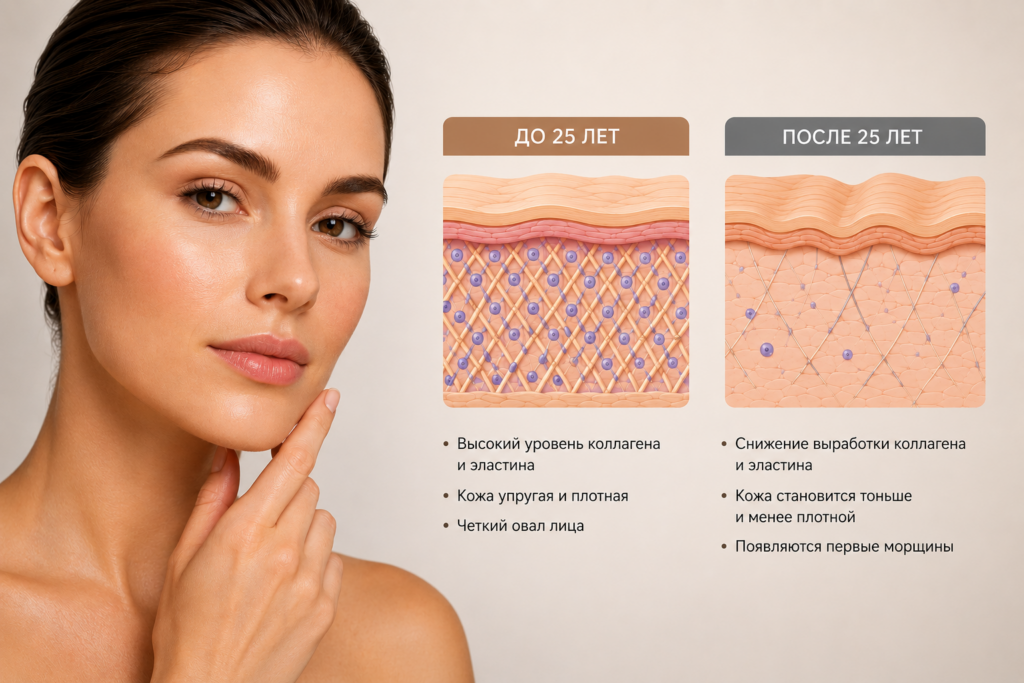
Примерно после 25 лет организм начинает вырабатывать меньше коллагена и эластина — белков, которые отвечают за упругость и тонус кожи. Этот процесс постепенный, но неизбежный: кожа становится тоньше, теряет плотность, появляются первые морщины. Полимолочная кислота — один из немногих инструментов в косметологии, который работает именно с этой причиной, а не с её последствиями.
Что такое полимолочная кислота
Полимолочная кислота (PLLA, или ПМК) — биоразлагаемый полимер, получаемый из молочной кислоты, которая естественным образом вырабатывается в организме человека. Это означает, что препарат полностью совместим с тканями и со временем распадается на безопасные продукты обмена — углекислый газ и воду — без каких-либо остатков.
В косметологии ПМК работает иначе, чем привычные филлеры. Гиалуроновая кислота заполняет пространство и удерживает влагу — это быстрый, но временный эффект. Полимолочная кислота действует как биостимулятор: она не просто заполняет морщины, а заставляет фибробласты — клетки, ответственные за синтез коллагена, эластина и гиалуроновой кислоты, — начать активно работать.
Как именно запускается коллагеногенез
После введения в дерму микрочастицы препарата вызывают контролируемую воспалительную реакцию низкой интенсивности. Это сигнал для организма: запустить процесс восстановления. Фибробласты активируются и начинают синтезировать новые коллагеновые волокна вокруг частиц препарата, постепенно формируя плотный коллагеновый каркас. По мере того как ПМК биодеградирует, её место занимает собственный коллаген пациента.
Именно поэтому результат от полимолочной кислоты называют естественным: кожа омолаживается за счёт собственных ресурсов, а не за счёт введённого вещества.
Что меняется во внешности
Новые коллагеновые волокна уплотняют кожу, улучшают её рельеф и восстанавливают объём в зонах, где ткани провисли. Среди заметных эффектов — разглаживание морщин и заломов, лифтинг овала лица, улучшение текстуры кожи, а также коррекция постакне и рубцов. Дополнительно препараты на основе ПМК стимулируют выработку собственной гиалуроновой кислоты, что улучшает увлажнённость кожи изнутри.
Кому подходит процедура
Полимолочная кислота подходит как женщинам, так и мужчинам с любым типом кожи. Наиболее показана при снижении тонуса и упругости, потере чёткости овала лица, глубоких морщинах и заломах, а также при желании получить долгосрочный результат без хирургического вмешательства. Среди противопоказаний — беременность, грудное вскармливание, аутоиммунные заболевания соединительной ткани и острые воспалительные процессы на коже.
Когда появляется эффект после инъекций полимолочной кислоты
Главная причина разочарований после PLLA — неправильные ожидания. Пациенты ждут мгновенного результата, как от гиалуроновых филлеров, но полимолочная кислота работает принципиально иначе. Это биостимулятор — его задача не заполнить, а запустить. Разбираемся, как именно развивается эффект во времени.
В день инъекций кожа может выглядеть более объёмной — это связано с отёком и введённым раствором, а не с реальным результатом. В течение нескольких дней отёк спадает, и на какое-то время кожа возвращается к исходному виду. Многие пациенты в этот момент беспокоятся, что процедура не сработала — на самом деле всё только начинается.
Фибробластам нужно время, чтобы отреагировать на введённый биостимулятор и начать синтез новых коллагеновых волокон. Первые изменения — улучшение качества и текстуры кожи, лёгкое уплотнение — становятся заметны примерно через 3–8 недель после процедуры. Кожа выглядит свежее, тон выравнивается, появляется ощущение плотности.
Максимальный результат достигается через 2–3 месяца после завершения курса, когда коллагеновый каркас полностью сформирован. Именно в этот период заметны лифтинг овала лица, разглаживание морщин и восстановление объёмов. Эффект выглядит естественно — кожа меняется постепенно, без резких переходов.
Как долго держится результат
В среднем эффект сохраняется 18–30 месяцев — значительно дольше, чем у филлеров на основе гиалуроновой кислоты, которые держатся 6–12 месяцев. Это связано с тем, что результат обеспечен собственным коллагеном пациента, а не введённым веществом.
Поддерживающие процедуры планируются через 18–24 месяца после первичного курса. К этому времени коллагеновый каркас начинает естественным образом разрушаться, и короткий курс из 1–2 сеансов позволяет обновить результат.
От чего зависит скорость эффекта
На сроки влияют возраст пациента, исходное состояние кожи, образ жизни и соблюдение рекомендаций врача после процедуры. У пациентов старшего возраста фибробласты работают медленнее, поэтому результат может проявляться чуть позже — но сохраняется при этом не менее стойко.
Можно ли сочетать полимолочную кислоту с другими инъекциями
Один из частых вопросов на консультации: «Я уже делаю ботокс и филлеры — есть ли смысл добавлять полимолочную кислоту? Они не будут мешать друг другу?» Ответ — не только не будут, но и усилят результат. Главное — правильно выстроить очерёдность.
Полимолочная кислота решает задачу, с которой не справляются ни ботокс, ни гиалуроновые филлеры: она восстанавливает качество самой кожи — её плотность, структуру и коллагеновый каркас. Ботулинотерапия расслабляет мышцы и сглаживает динамические морщины. Филлеры восполняют объём и корректируют контуры. PLLA работает глубже — на уровне дермы, запуская неоколлагенез. Это разные механизмы, которые дополняют, а не дублируют друг друга.
С чем сочетается полимолочная кислота
С ботулинотерапией — одна из наиболее распространённых и эффективных комбинаций. Ботокс фиксирует мимику, PLLA восстанавливает структуру кожи. Вместе они дают взаимно усиливающий эффект: результат от ботокса выглядит естественнее на фоне более плотной и упругой кожи.
С мезотерапией и биоревитализацией — хорошее сочетание для комплексного улучшения качества кожи: мезотерапия насыщает кожу активными компонентами, PLLA запускает долгосрочную биостимуляцию.
С мезонитями — PLLA и нити работают на разных уровнях ткани и взаимно усиливают лифтинг-эффект.
С аппаратными процедурами — RF-лифтинг и ультразвуковая SMAS-терапия хорошо сочетаются с полимолочной кислотой, поскольку термическое воздействие дополнительно стимулирует фибробласты.
Что не стоит совмещать
Полимолочную кислоту не рекомендуется вводить одновременно с гиалуроновыми филлерами в одну зону — это может нарушить распределение препарата. Также не стоит проводить несколько инъекционных процедур в один день: тканям нужно время для восстановления между воздействиями.
Как правильно выстроить очерёдность
Универсальной схемы нет — протокол всегда составляется индивидуально. Как правило, сначала проводится ботулинотерапия или коррекция филлерами, а курс PLLA начинается через 2–3 недели. Обратная последовательность тоже возможна. Ключевое условие — один врач, который видит общую картину и управляет всеми этапами лечения.
Если вы хотите узнать, подходит ли вам эта процедура, запишитесь на консультацию к врачу-косметологу Medest. Специалист подберёт индивидуальный план лечения с учётом состояния вашей кожи и ваших целей.