Antioxidant Skin Protection in Summer: Meso-Xanthin F199 vs Photoaging
Why Sunscreen Alone Is Not Enough for Summer Skin Protection
Sunscreen remains a fundamental step in skincare during the summer season; however, its action is mainly limited to blocking ultraviolet radiation on the surface of the skin.
The issue is that even with regular SPF use, a portion of UV rays still penetrates into the deeper layers of the skin. There, they trigger oxidative stress processes that damage cellular structures and gradually lead to photoaging.
For this reason, modern dermatology increasingly views summer skin protection not only as an external barrier, but also as a need to support the skin’s internal repair mechanisms.
What Is Meso-Xanthin F199 and How Does It Work
Meso-Xanthin F199 is an injectable epigenetic drug developed by ABG Lab (USA), used for antioxidant skin protection and the prevention of photoaging.
Its key active ingredient is fucoxanthin, a powerful marine carotenoid with strong antioxidant properties. It helps neutralize free radicals generated by UV exposure and activates DNA repair processes in skin cells.
The formulation also contains hyaluronic acid, amino acids, peptides, vitamins A, C, E, and growth factors, allowing for a comprehensive effect—supporting not only protection but also the skin’s regenerative potential.
Photoaging: Why It Develops Silently
Photoaging develops gradually and often shows no obvious clinical signs in its early stages. At the cellular level, damage accumulates in mitochondria and DNA, the skin’s ability to regenerate decreases, and chronic low-grade inflammation increases.
Over time, these processes lead to pigmentation, reduced skin density, and loss of natural radiance.
How Meso-Xanthin Works During the Summer Season
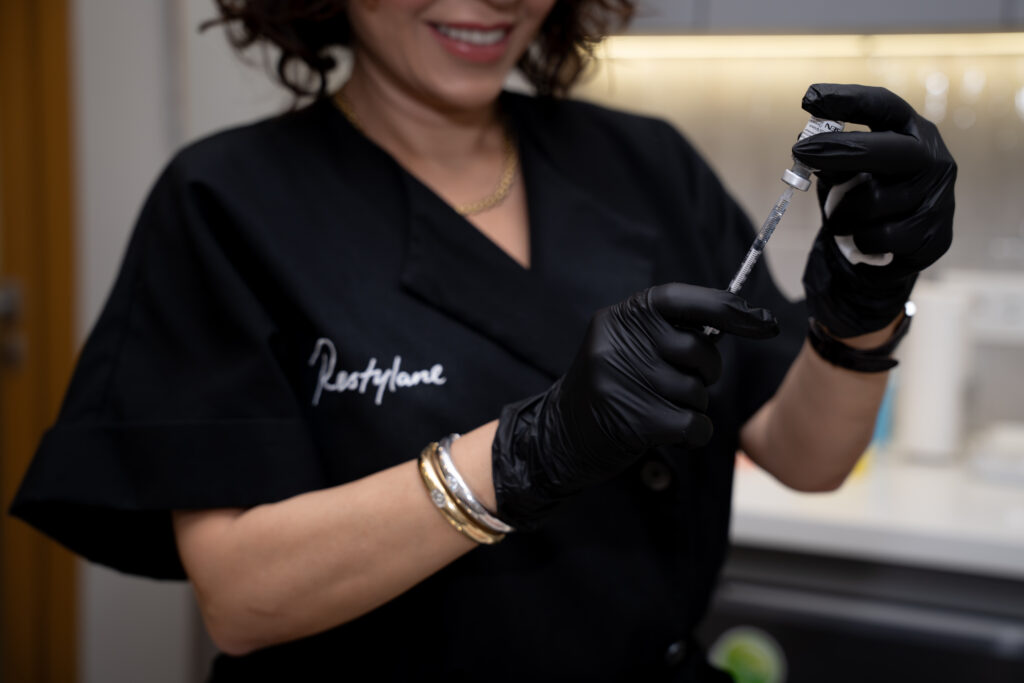
During summer, the skin is particularly vulnerable due to increased UV exposure and accumulated oxidative stress. Meso-Xanthin F199 acts as biological support for the skin, helping to reduce the effects of ultraviolet radiation.
It strengthens the skin’s antioxidant defense systems, lowers the risk of pigmentation, and helps maintain overall skin quality and tone during periods of intense sun exposure.
Meso-Xanthin is recommended for patients with signs of photo-damaged skin, dull complexion, increased tendency to pigmentation, as well as post-acne that worsens under sun exposure.
The standard treatment course includes 4–6 sessions performed at intervals of 7–14 days. The effect is cumulative and typically maintained with a repeat course approximately once per year.
In modern aesthetic medicine, Meso-Xanthin F199 is considered a method for the prevention of photoaging, aimed not only at skin restoration but also at strengthening its cellular defense mechanisms.
If you would like to determine whether this protocol is suitable for you, a consultation with a Medest cosmetic physician is recommended.